


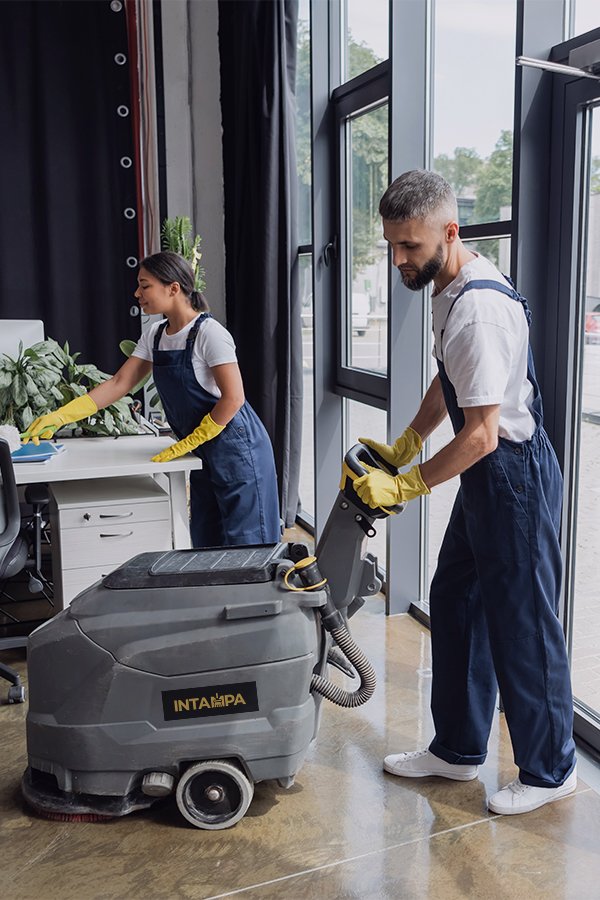
Office cleaning service in Celebration Florida is shaping the return to shared work
At 6 a.m., an office in Celebration looks ready for business. Desks sit in rows. Glass doors hold no fingerprints. Restrooms carry fresh supplies. Break rooms show no trace of yesterday’s lunch. Yet this calm appearance follows a night shift built around chemicals, lifting, repetitive motion, tight schedules, and work most employees never witness. An Office cleaning service in Celebration Florida now sits at the center of a larger argument about workplace trust, hybrid schedules, indoor health, labor standards, and the price businesses assign to shared space.
The thesis is clear. Office cleaning should function as part of workplace operations, not as a cosmetic purchase hidden near the bottom of a monthly budget. A sound program responds to occupancy, protects indoor air, separates cleaning from disinfection, supports frontline workers, and gives managers measurable evidence. A weak program leaves offices looking acceptable from a distance while dirt, supply failures, odors, unsafe chemical practices, and employee frustration gather out of sight.
Celebration’s professional image depends on routine labor
Celebration presents a controlled public identity. Offices, medical suites, leasing centers, financial firms, and hospitality companies operate near homes, restaurants, shops, and visitor traffic. The town’s visual standards create pressure inside commercial buildings.
U.S. Census Bureau estimates for 2020 through 2024 list 5,404 households in Celebration, a median household income of $96,242, median gross rent of $2,020, and median monthly ownership costs of $2,897 for households with a mortgage. The same data shows 21.6 percent of residents age five and older speak a language other than English at home. These figures describe a costly, multilingual community where tenants, clients, and workers carry high expectations for property care and clear communication.
An office changes through ordinary contact. Shoes bring sand and rainwater indoors. Hands touch handles, switches, elevator buttons, printers, coffee machines, faucets, and shared tables. Food leaves residue. Paper creates dust. A cleaning plan must follow these patterns rather than rely on a fixed list copied from another property.
Office cleaning service in Celebration Florida after remote work
Hybrid work changed the office without making the office irrelevant. The Bureau of Labor Statistics reported 35 percent of employed people completed some or all paid work at home on days worked in 2025. Seventy percent completed some or all work at a workplace. Full-time workers who worked at a workplace spent an average of 8.21 hours there on those days.
These numbers matter for cleaning because occupancy now moves in uneven waves. A building may feel empty on Friday and crowded on Tuesday. Conference rooms may sit unused for days, then host back-to-back meetings. Shared desks receive different people across a week. Break rooms face sharp demand around scheduled team days. Restrooms experience concentrated traffic instead of a steady flow.
A contract based on old five-day routines may waste labor in low-traffic areas and miss pressure points during peak days. Managers need occupancy-informed schedules. They should connect cleaning frequency with badge counts, meeting calendars, visitor appointments, tenant patterns, and event bookings.
Better scheduling places labor where demand rises. Monday may require a deeper reset after weekend activity. Tuesday may need extra restroom checks and break-room attention. Friday may favor floor care or detail work in lightly occupied zones.
Clean, sanitized, and disinfected are separate standards
Office managers often treat three different processes as one. Cleaning removes dirt and most germs through detergent, water, and physical action. Sanitizing reduces germs to levels set by public health standards. Disinfecting targets germs with registered chemical products after soil leaves the surface.
The Centers for Disease Control and Prevention states regular cleaning is enough in most facility settings. Disinfection becomes more relevant after illness, contamination, or another defined risk. The agency also advises matching products with surface materials and following label directions.
This distinction protects budgets and people. Blanket disinfection across every desk, wall, and chair increases chemical exposure and may damage finishes. A focused plan gives more attention to high-contact surfaces, restrooms, shared equipment, food areas, and illness events.
Contact time deserves special attention. Many disinfectants need to stay wet for a stated period. A worker who sprays and wipes at once may complete the motion without completing the process. Managers who demand unrealistic speed create conditions for this shortcut.
An Office cleaning service in Celebration Florida should define each task in plain terms. “Clean conference room” leaves too much room for interpretation. A stronger scope names tables, chairs, touchpoints, glass, waste, carpet spots, whiteboards, supply checks, and frequency. Precision protects both sides of the contract.
Indoor air belongs in the cleaning discussion
A clean-looking office may still feel stale, irritating, or uncomfortable. The Environmental Protection Agency identifies cleaning products, office equipment, furniture, flooring, ventilation problems, and accidental chemical spills among possible indoor pollution sources. The agency links indoor air management with ventilation, building layout, maintenance, and control of pollutant sources.
Cleaning crews affect this system. Heavy fragrance may mask odor while adding irritation. Aerosol products may spread into occupied areas. Dusting methods may move particles into the air instead of removing them. Wet carpet left without airflow may develop odor and moisture problems. Blocked vents may remain unnoticed for weeks.
Property managers should coordinate cleaning with heating, ventilation, and air-conditioning teams. Crews should report blocked vents, damp ceiling tiles, recurring condensation, leaks, unusual odors, and visible dust near returns. Cleaning should happen with suitable ventilation when labels call for it. Product quantity should match the task.
Indoor air also carries a psychological effect. Employees read odor, dust, and stuffiness as signs of neglect. A strong fragrance does not create trust. A neutral, maintained space often produces a better response because it signals control without overwhelming the senses.
The labor problem hidden inside the lowest bid
Janitors and building cleaners earned a median hourly wage of $17.27 in May 2024, according to the Bureau of Labor Statistics. The agency projects about 351,300 openings each year from 2024 through 2034, mostly because workers leave the occupation or exit the labor force.
These figures expose the instability behind office appearance. Cleaning often takes place at night, early in the morning, or during weekends. Workers lift waste, push equipment, bend, reach, climb stairs, and handle chemicals. They also enter private offices, secure rooms, and shared spaces where trust matters.
A low contract price often reaches the crew through fewer labor hours, lower wages, reduced training, poor equipment, or thin supervision. The office still expects the same result. Workers respond by rushing, skipping detail work, overloading carts, mixing tasks, or leaving defects for the next shift.
The cost returns through complaints, turnover, damaged floors, supply shortages, and repeated retraining. A cheap contract may require managers to spend hours documenting failures and calming tenants. This hidden management time belongs in the real price.
Businesses should ask each bidder for estimated labor hours, crew size, supervision, equipment, supply responsibility, periodic tasks, and response procedures. A monthly total without an operating model tells little about performance.
Chemical safety is a management duty
The Occupational Safety and Health Administration warns cleaning workers may face hazardous chemicals, dangerous equipment, and physical tasks linked with injury or illness. OSHA guidance calls for labels, safety data sheets, training, protective equipment, ventilation, and strict separation of incompatible products.
Bleach and ammonia must remain apart. Concentrates need correct dilution. Secondary bottles need labels. Gloves must match the chemical. Eye protection belongs near splash risks. Storage rooms need order, airflow, and controlled access.
Language access matters in Celebration. Training presented in a language a worker does not fully understand fails at the point of risk. Visual instructions, translated materials, demonstrations, and supervisor checks strengthen compliance.
A property owner may outsource cleaning, yet risk does not disappear. Chemical spills, damaged finishes, worker injuries, and air complaints still affect the building. Contract review should include safety practices, insurance, incident reporting, and product approval.
What a serious office cleaning contract should measure
A checklist should connect each task with a location, frequency, standard, and correction path. “Restroom complete” is too broad. Managers need clear expectations for fixtures, partitions, dispensers, mirrors, floors, drains, odor, waste, and supplies.
Digital records support accountability. Time stamps, inspection photographs, issue tickets, and supply reports establish a shared record. They do not replace supervision. A photograph misses odor, sticky residue, poor airflow, or a loose toilet seat.
Managers should inspect at different hours. A lobby may look good before staff arrive and fail after rain. A break room may pass at 8 a.m. and decline after lunch. Restrooms may need service during the day rather than another late-night visit.
The best metrics connect cleaning with business outcomes. Track complaints, repeat defects, restroom supply failures, slip events, pest sightings, response time, floor damage, and tenant feedback. Compare these results with occupancy and service hours. A lower complaint count means little when employees stop reporting problems.
Office cleaning is part of workplace culture
Employees read shared spaces as evidence of how management thinks. Empty soap dispensers, dirty microwaves, overflowing bins, and stained carpets send a direct message. They say small problems may wait because nobody holds responsibility.
Clean offices do not fix low pay, poor leadership, excessive workloads, or weak benefits. They do affect daily dignity. A maintained restroom respects the people who enter it. A clean break room respects lunch as part of the workday. A dust-free desk matters to a worker with allergies. A clear floor protects a person with limited mobility.
Your cleaning plan should match the office you operate now, not the office from 2019. Review occupancy. Map contact points. Separate routine cleaning from targeted disinfection. Protect indoor air. Fund realistic labor. Demand evidence without turning workers into data points.
Office cleaning service in Celebration Florida should make hidden standards visible
An Office cleaning service in Celebration Florida performs its best work when the result feels ordinary. Employees arrive without thinking about trash, fingerprints, restroom supplies, dust, odors, or floor safety. This ordinary experience rests on planning, labor, chemistry, supervision, and money.
Celebration’s professional image depends on such details. The office may sell legal advice, health care, real estate, hospitality, finance, or technology. Before any client evaluates the service, the client evaluates the room.
A clean office does not need to look staged. It needs to feel maintained. The difference comes from a contract built around people, materials, traffic, and proof. Businesses show their real priorities through the spaces employees share each day.