


Cabinets painting service in Celebration Florida turns worn kitchens into disciplined property upgrades
Cabinets painting service in Celebration Florida begins with a surface residents touch every day. Grease settles near handles. Steam reaches upper doors. Cleaning products dull old finishes. Edges chip. Hinges loosen. A kitchen may remain functional while its cabinets make the entire unit feel neglected.
Celebration carries high housing costs and firm expectations around property presentation. U.S. Census Bureau estimates for 2020 through 2024 place the median owner-occupied housing value at $635,000. Celebration’s residential association also identifies property-value protection and community standards among its goals. Inside this setting, cabinet condition affects rental turns, resale preparation, resident satisfaction, and maintenance budgets.
The central argument is direct. Cabinet painting works best as asset preservation, not a quick layer of color. A sound project protects stable cabinet boxes and doors, limits demolition, reduces material waste, and refreshes a high-contact room. Weak preparation produces peeling edges, blocked hinges, rough texture, and repeat labor.
Cabinets sit at the center of daily life
Kitchen cabinets receive constant contact. Hands reach for doors before breakfast. Steam rises during cooking. Oils settle near ranges. Water reaches sink bases. Cleaning cloths pass over painted surfaces each week. Children, pets, tenants, guests, and maintenance staff add separate patterns of wear.
Cabinet condition shapes how a room feels because cabinets occupy so much visual space. Replacing countertops or appliances may fail to lift the room when dark, damaged, or uneven doors remain. Fresh cabinet coatings may reset the room without altering its layout.
The service still needs limits. Paint does not repair swollen particleboard, broken boxes, major water damage, failed joints, or unstable mounting. Those conditions require repair or replacement before finishing work begins.
Cabinets painting service in Celebration Florida starts with material identification
Cabinet doors may consist of solid wood, wood veneer, medium-density fiberboard, plywood, laminate, thermofoil, melamine, or mixed materials. Each surface responds differently to cleaning, sanding, primer, heat, and moisture.
Solid wood often accepts preparation and coating well when the material remains dry and stable. MDF offers a smooth face but damaged edges absorb moisture fast. Laminate needs strong cleaning, abrasion, and a bonding primer suited to slick surfaces. Thermofoil presents a separate challenge because loose vinyl or heat damage may continue after coating.
A technician should inspect doors, drawer fronts, face frames, side panels, boxes, shelves, hinges, and hardware. The review should identify grease, peeling finish, failed caulk, swelling, cracks, dents, loose joints, and prior coating layers.
Material identification protects the finish. A coating system selected for one surface may fail on another. The written estimate should name the known substrate and state any uncertainty found during inspection.
Preparation controls adhesion
Most cabinet failures begin beneath the finish. Kitchen residue builds slowly and often looks invisible under ordinary light. Body oils gather around knobs and pulls. Silicone sprays, furniture polish, wax, and cooking grease interfere with adhesion.
Crews need a strict preparation sequence. Hardware comes off. Doors and drawer fronts receive labels. Surfaces receive degreasing through products suited to the substrate. Rinsing or residue removal follows product directions. Damaged areas receive repair. Glossy finishes receive controlled abrasion. Dust leaves the surface before primer begins.
Sanding should support adhesion without cutting through veneer or damaging routed edges. Vacuum extraction and controlled work zones help limit airborne dust. Clean cloths remove remaining particles before coating.
Primer matters on slick surfaces, bare wood, repaired MDF, stained areas, and dark finishes moving toward pale colors. One universal primer rarely fits every cabinet material. Product data sheets should guide compatibility, drying time, and recoat intervals.
Painting over grease may look acceptable for several days. Daily contact soon finds the weak bond.
Doors need removal and tracking
Cabinet painting becomes a logistics project once crews remove doors and drawers. Every piece needs a number tied to its original location. Hinges, screws, pulls, and specialty hardware need organized storage.
Poor tracking creates alignment problems during installation. Similar doors may differ by small measurements. Hinges may carry prior adjustments matched to one location. Drawer fronts may align with nearby doors through narrow gaps.
A clear labeling system protects sequence. Photos before removal help record hinge position, hardware direction, and existing spacing. The crew should also note damaged hinges, stripped screws, missing bumpers, and loose drawer slides.
Off-site finishing may reduce disruption inside occupied homes, while on-site finishing may simplify transport and tracking. Each method needs protection against dust, weather, handling damage, and mixed parts.
Sprayed finishes demand containment
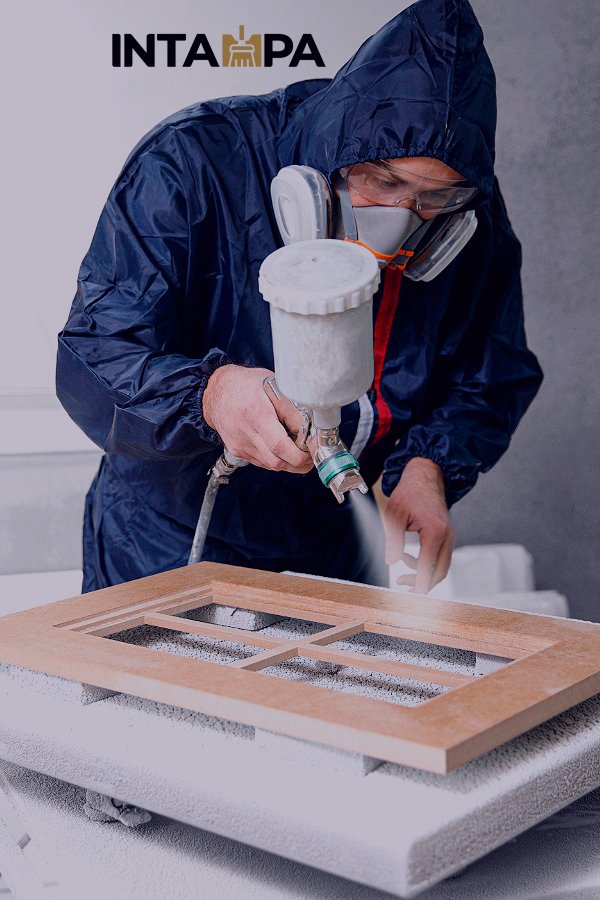
Spraying often gives cabinet doors a smooth, consistent finish. The method also releases fine coating particles and vapors into the work area. Containment, filtration, ventilation, and surface protection matter.
Crews should isolate the kitchen from occupied rooms. Floors, counters, appliances, walls, fixtures, and nearby belongings need full protection. Air movement should pull fumes away from occupants and toward a safe exterior discharge point.
EPA guidance states paints and related products release volatile organic compounds into indoor air. The agency recommends strong ventilation during painting and continued ventilation after work. Low-VOC or zero-VOC coatings may reduce the indoor pollution load, yet performance, durability, and full product composition still deserve review.
Brush and roller application reduces airborne overspray but may leave texture when technique or product selection falls short. A professional service should match application method to the desired finish, site conditions, coating system, and occupancy plan.
Coating choice affects daily durability
Cabinet coatings face hand oils, cleaning, moisture, impact, and repeated movement. Wall paint rarely provides enough hardness for this workload. Cabinet-grade enamels and specialty coatings offer stronger adhesion, leveling, and resistance when matched to the substrate.
Finish sheen affects appearance and care. Satin and semi-gloss finishes often support wiping and resist moisture better than flat coatings. Higher sheen also exposes sanding marks, dents, and uneven preparation.
Color matters beyond style. Pale finishes show dark grease and scuffs sooner. Deep colors may show dust, fingerprints, and edge wear. Strong contrast between doors and boxes makes alignment defects easier to see.
Property managers should keep records for brand, product, color, formula, sheen, primer, and application date. Future touch-ups become easier when records remain with the unit.
Cure time is longer than dry time
A cabinet door may feel dry within hours while the coating remains soft beneath the surface. Full cure may take days or longer, depending on product, humidity, temperature, film thickness, and airflow.
Celebration’s humid climate adds pressure to the schedule. Air conditioning and controlled ventilation help coatings develop hardness. Heavy handling during early cure leaves fingerprints, dents, blocking, or edge damage.
Doors should return to service according to manufacturer guidance. Hardware installation needs care around fresh surfaces. Bumpers help prevent painted doors from sticking against frames. Residents should receive instructions about gentle handling and cleaning during the early cure period.
A rushed rental turn may place cookware, cleaners, and shelf liners back too soon. Management should build cure time into the turnover calendar rather than treating installation day as final completion.
Color changes affect the whole room
Cabinet color interacts with counters, backsplash, floors, walls, appliances, hardware, and light. A sample viewed under store lighting may shift inside the kitchen. Warm bulbs, daylight, shaded windows, and reflective counters alter perception.
White and warm neutral cabinets remain common because they support broad rental appeal and brighter interiors. Dark green, navy, gray, and black finishes suit selected properties but demand tighter coordination with lighting and surrounding materials.
For rental portfolios, standard colors simplify future maintenance. For owner-occupied homes, a tailored palette may support personal goals and resale plans. The final choice should respect room conditions, maintenance expectations, and the property’s wider presentation.
Hardware becomes part of the repair decision
Fresh coatings draw attention toward knobs, pulls, hinges, and drawer slides. Worn hardware may weaken the result. New pulls may improve function, yet changing hole spacing adds filling, drilling, and alignment work.
Hidden hinges need inspection before reinstallation. Loose screws may need repair inside the cabinet material. Drawer slides should move smoothly. Soft-close parts need testing. Missing bumpers should receive replacement.
Hardware changes should appear in the estimate. Property managers need to know whether the provider will clean existing pieces, install new pieces, repair mounting holes, or leave hardware work outside the scope.
Cleaning practices shape service life
Fresh cabinet finishes need suitable care. Abrasive pads, harsh solvents, bleach-heavy products, and saturated cloths may dull or weaken coatings. Water should never sit along seams, sink bases, or damaged edges.
Residents should wipe spills soon and clean with a mild product approved by the coating manufacturer. Cloths should remain damp rather than soaked. Grease near cooking areas needs regular attention before buildup hardens.
Maintenance teams should address chips early. A small break in the coating exposes the substrate to moisture and impact. Touch-up work should match the original system rather than rely on random paint left from another unit.
Painting and replacement need an honest comparison
Cabinet painting often costs less and produces less demolition than full replacement. It also preserves existing boxes when layout, storage, and structure remain serviceable.
Replacement makes more sense when boxes show broad water damage, poor construction, unstable mounting, broken layouts, severe swelling, or repeated coating failure. Refacing may fit projects where boxes remain sound but door style needs a full change.
A condition survey should separate painting candidates from repair and replacement candidates. This prevents a cosmetic budget from covering structural defects.
INTAMPA INC and coordinated make-ready work
INTAMPA INC lists cabinets painting among its make-ready services for Central Florida properties. Its related services include unit painting, move-out cleaning, carpet care, bathtub and counter resurfacing, drywall repair, unit punch work, and rental preparation.
This service mix fits apartments, rental homes, offices, and managed properties with tight schedules. One coordinated provider may complete approved repairs, prepare cabinet surfaces, apply coatings, reinstall hardware, and support final cleaning.
Each project still needs a detailed scope. Owners and managers should request door counts, substrate notes, repair allowances, coating information, application method, ventilation plan, cure schedule, hardware responsibilities, and exclusions.
A painted cabinet should represent disciplined maintenance
Cabinets painting service in Celebration Florida gives property owners a practical route between living with worn finishes and removing an entire cabinet system. The service preserves sound materials, reduces disruption, and changes one of the most visible parts of a home.
The finish earns value through work residents never see. Degreasing. Labeling. Repairs. Abrasion. Primer. Dust control. Ventilation. Cure time. Careful reinstallation.
Celebration links property presentation with community value. Inside each kitchen and bathroom, cabinets carry this standard through daily contact. A strong project does not hide damage beneath color. It restores a stable surface through a controlled process and prepares the room for years of ordinary life.